One of the key challenges surrounding trend following is that it is reactive in nature. This is the same for all trend indicators. There must be a passage of time and a movement against the ‘current’ trend direction before it is possible to recognise that a directional change may be validated. Having confidence in trend direction is critical for success, so it is key to ensure that the method used is simple, easy to visualise and act upon. The cost associated with erroneous trend recognition can be significant, so it naturally follows that the avoidance of ‘false signals’ is key i.e., current trends which may be recognised but then quickly revert to the original trend, thereby inducing costs for false entry and exit trades. It is important to try to identify only those trends which have strong validity.
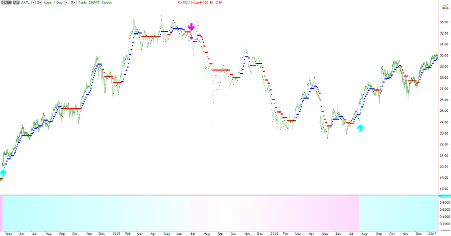
For this task, we use our proprietary TrendPrep Indicator – a simple example can be seen in the graph below. The purpose of this indicator is to minimise noise, clearly identify the current bias, and eventually the status of the current trend, and what might constitute the formation of a new trend. This indicator features regularly throughout this website to explain where points of least resistance may be. Unlike many indicators, it does not have a look back period, but instead uses volatility to determine the next point in the indicator series. There are no parameters used, so the indicator is consistent throughout and can be used on any financial instrument to determine general trends.